

SaaS product development succeeds when you narrow one painful job, ship a usable MVP, and instrument activation before you add feature theater.
Write a one-sentence problem, interview real buyers, and pre-sell or waitlist before you polish UI. If nobody joins a waitlist, the idea is not ready. Teams that treat SaaS product development as an operating system—not a one-off project—ship fewer surprises and learn faster from real usage.
Validate before you scale SaaS product development
Pick a stack for speed: auth, tenancy, billing, and audit logs first. Prefer boring technology for payments and email; innovate on the workflow customers pay for.
Write assumptions down, assign an owner, and decide what “done” means before tools get purchased. That discipline keeps SaaS product development aligned with revenue and service quality instead of slideware.
Architecture choices that keep SaaS product development movable
Private beta with 5–10 target users beats a loud launch into silence. Charge early. Watch signup → activation → retention weekly.
Use short feedback loops: weekly demos, a visible backlog, and a single scoreboard everyone trusts. If a metric cannot change a decision, drop it.
| Stage | Goal | Signal |
|---|---|---|
| Idea | Problem clarity | Interview notes |
| MVP | One workflow live | Paid pilots |
| Beta | Retention | Weekly active use |
| Scale | Efficient growth | Stable unit economics |
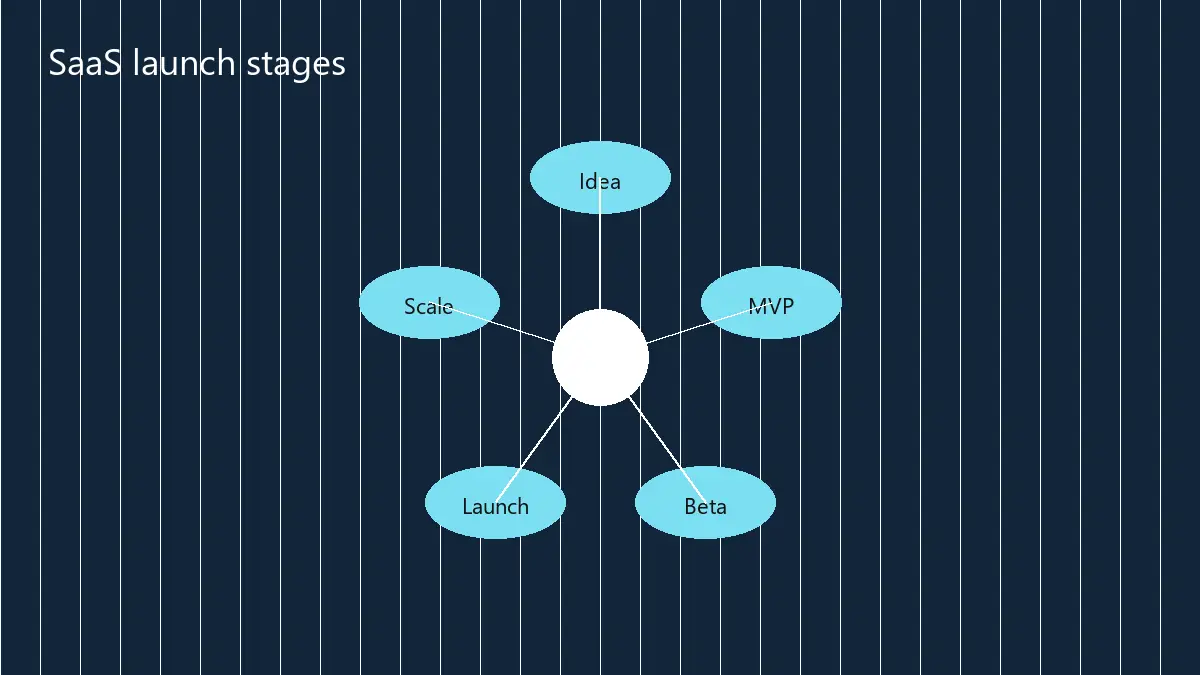
Launch, billing, and retention loops
After launch, fix the biggest leak before adding modules. Document onboarding scripts; early SaaS wins are often white-glove, not self-serve magic.
Publish a lightweight runbook covering owners, access, rollback steps, and review cadence. That is how SaaS product development survives holidays, staff changes, and busy seasons.
For reference reading see web.dev. When you need execution support, explore Custom development · Web development · contact.
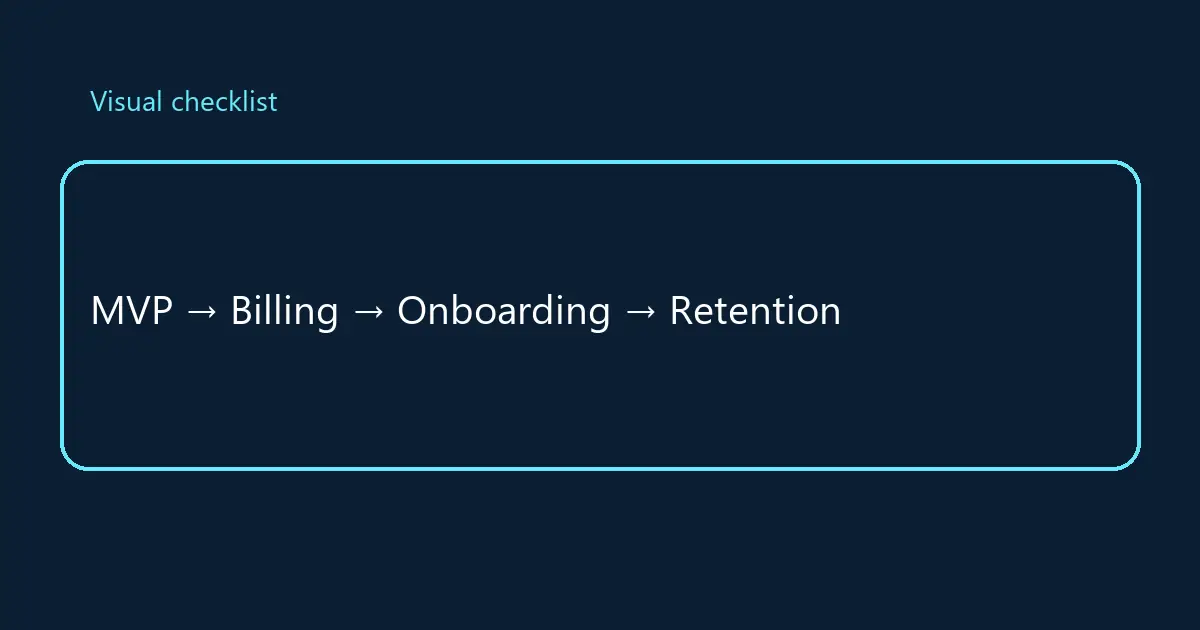
Write the operating metric before you buy tools—otherwise dashboards measure noise.
- Define the painful workflow and success metric
- Ship the smallest useful version
- Measure weekly and prune waste
- Document so the system survives staff changes
- Owner named for each critical workflow
- Baseline metrics captured before changes
- Security and access reviewed with the build
- Customer-facing copy matches what the system can deliver
Team habits that stabilize SaaS product development
Keep a living one-pager: ICP, promise, non-goals, and the single workflow the MVP must complete end-to-end.
Instrument activation events before polishing dashboards. If users never reach the aha moment, SaaS product development is producing screens, not value.
Separate marketing site messaging from in-app empty states. First-run copy should teach the job-to-be-done in under a minute.
Plan tenancy and permissions early even if you only have one seat types today. Retrofitting isolation is expensive.
Treat billing webhooks as first-class product code with retries and reconciliation reports. Silent failed renewals kill trust.
Run a weekly product review with qualitative notes from support. Charts without anecdotes miss why churn happens. Strong teams listen weekly.
Document deprecations. Removing a half-used feature is a product decision—communicate it like one.
Implementation checklist you can run this month
Block ninety minutes on the calendar with the decision maker and the person who does the daily work. Map the current path on a whiteboard, circle the handoffs that fail, and pick one improvement that can ship in two weeks without a committee.
Assign a single owner, write the success metric in one sentence, and schedule a review date before anyone opens a tool catalog. If the metric does not move, change the approach—not the slide deck.
Publish a short internal note after each iteration: what changed, what broke, what customers noticed. That archive becomes training material and keeps SaaS product development knowledge from living in one person’s head.
Finally, align your public pages and sales conversations with what the system can truly deliver. Overpromising creates support debt that no marketing channel can fix.
Practical 30-day action plan
Week 1: write the outcome metric, inventory current tools, and list the top three failure points with examples from the last month. Keep the list visible to whoever owns delivery.
Week 2: ship the smallest change that removes one failure point—template fix, automation, script, or process rule. Avoid parallel initiatives that dilute attention.
Week 3: measure results against the baseline, interview two people who use the workflow daily, and document surprises. Adjust scope based on evidence, not preference.
Week 4: package what worked into a checklist, train a backup owner, and schedule the next review. Systems that depend on one hero fail during vacations.
If leadership asks for a bigger transformation mid-sprint, park it on a backlog with a cost note. Momentum comes from finished loops, not larger slide decks.
Share a one-page summary with stakeholders: metric moved, cost in hours, risks remaining, and the next bet. Clear writing protects budgets and trust.
Common mistakes to avoid
Do not buy tools before the workflow is written. Software cannot fix an undefined handoff.
Do not skip training and ownership. Unowned systems return to spreadsheets within a quarter.
Do not optimize vanity metrics. If a chart cannot change a weekly decision, it is decoration.
Do not launch without a rollback path. Fast recovery beats perfect first releases.
Do not hide constraints from stakeholders. Transparent scope builds longer client and leadership relationships than optimistic silence.
Keep a living changelog for stakeholders: what shipped, what is blocked, and what decision is needed next. Written status reduces meeting load and keeps momentum when people work across time zones.
When priorities collide, protect the metric you chose in week one. Adding three new initiatives mid-cycle usually resets learning to zero and trains the team that plans are optional.
Close the loop with a short retrospective: keep, drop, try next. Ten honest minutes beat another hour of status theater.
Frequently asked questions
How long should an MVP take?
If the first usable release slips past 8–10 weeks, scope is probably wrong—cut until one job is complete.
Do I need microservices?
Almost never at MVP. A modular monolith ships faster and is easier to observe.
When should billing go live?
As soon as the core workflow helps someone; unpaid users give polite feedback, paying users give truth.
What metrics matter first?
Activation rate, time-to-value, retention week 4, and support load per account.
Want help applying this in your business?
Custom development · Web development · Start a conversation.