

Google Business Profile optimization is the fastest local lever for many service businesses: accurate NAP, precise categories, proof-rich photos, and review velocity that matches real demand.
Claim and verify the listing, match the real-world name, and keep address or service-area settings accurate. Inconsistent NAP across the site and directories still hurts. Teams that treat Google Business Profile optimization as an operating system—not a one-off project—ship fewer surprises and learn faster from real usage.
Foundation checklist for Google Business Profile optimization
Choose the most specific primary category, add only relevant secondary categories, and describe services in plain language customers search.
Write assumptions down, assign an owner, and decide what “done” means before tools get purchased. That discipline keeps Google Business Profile optimization aligned with revenue and service quality instead of slideware.
Categories, services, and Google Business Profile optimization signals
Upload exterior, interior, team, and job-site photos regularly. Respond to reviews with specifics. Use posts for offers and project proof—not keyword stuffing.
Use short feedback loops: weekly demos, a visible backlog, and a single scoreboard everyone trusts. If a metric cannot change a decision, drop it.
| Signal | Why it matters | Owner habit |
|---|---|---|
| Categories | Query matching | Quarterly review |
| Photos | Trust + engagement | Weekly uploads |
| Reviews | Conversion + rank | Ask after jobs |
| Posts | Freshness | Biweekly updates |
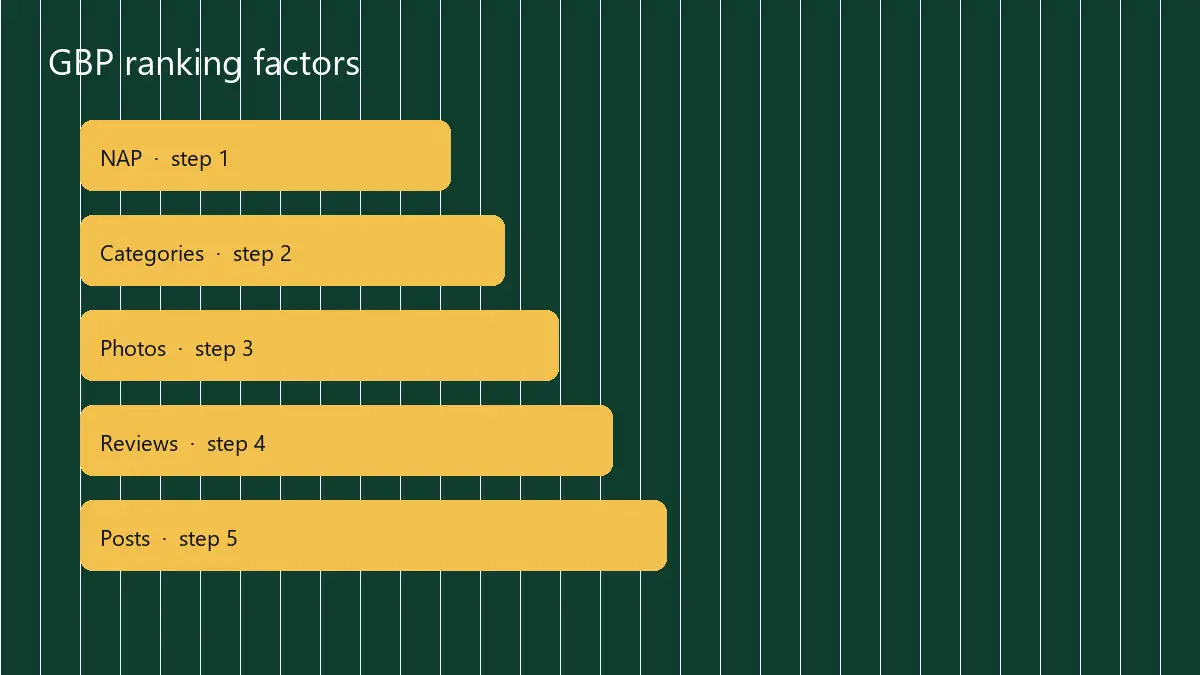
Reviews, posts, and Maps conversion
Track calls, direction requests, and website clicks from the profile. Pair Maps wins with on-site landing pages that match the same services and cities.
Publish a lightweight runbook covering owners, access, rollback steps, and review cadence. That is how Google Business Profile optimization survives holidays, staff changes, and busy seasons.
For reference reading see Google tips to improve local ranking. When you need execution support, explore Google Business Profile service · Local SEO · contact.
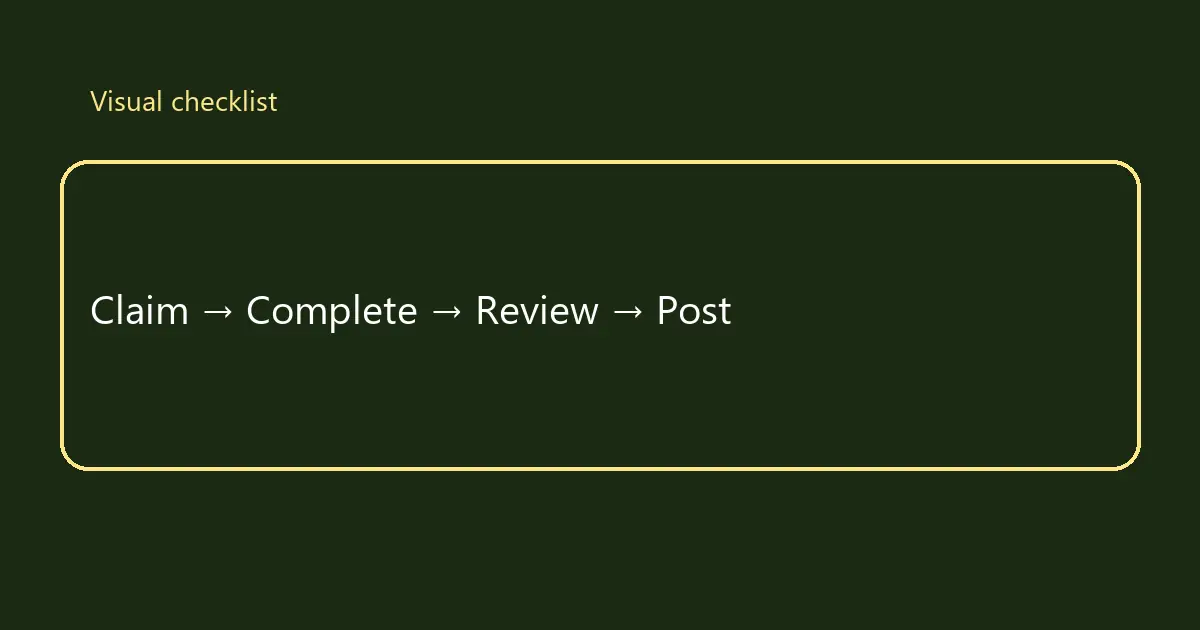
Write the operating metric before you buy tools—otherwise dashboards measure noise.
- Define the painful workflow and success metric
- Ship the smallest useful version
- Measure weekly and prune waste
- Document so the system survives staff changes
- Owner named for each critical workflow
- Baseline metrics captured before changes
- Security and access reviewed with the build
- Customer-facing copy matches what the system can deliver
Weekly local habits for Google Business Profile optimization
Ask for reviews after completed jobs with a short direct link. Make it easy; never gate or incentivize against policies.
Reply to every review with specifics about the service and next step. Templates are fine; copy-paste emptiness is not. Consistent Google Business Profile optimization includes conversation, not only fields.
Upload fresh photos from real work—before/after, team on site, vehicles, interiors. Seasonal updates signal an active business.
Keep products/services lists aligned with landing pages on your site. Mismatch confuses Maps users who click through.
Monitor Q&A on the profile. Seed accurate answers and correct outdated community replies politely.
Track which categories competitors use without copying junk categories. Precision beats volume for .
Audit hours around holidays. Wrong hours create angry calls and bad reviews faster than almost any ranking tweak.
Implementation checklist you can run this month
Block ninety minutes on the calendar with the decision maker and the person who does the daily work. Map the current path on a whiteboard, circle the handoffs that fail, and pick one improvement that can ship in two weeks without a committee.
Assign a single owner, write the success metric in one sentence, and schedule a review date before anyone opens a tool catalog. If the metric does not move, change the approach—not the slide deck.
Publish a short internal note after each iteration: what changed, what broke, what customers noticed. That archive becomes training material and keeps Google Business Profile optimization knowledge from living in one person’s head.
Finally, align your public pages and sales conversations with what the system can truly deliver. Overpromising creates support debt that no marketing channel can fix.
Practical 30-day action plan
Week 1: write the outcome metric, inventory current tools, and list the top three failure points with examples from the last month. Keep the list visible to whoever owns delivery.
Week 2: ship the smallest change that removes one failure point—template fix, automation, script, or process rule. Avoid parallel initiatives that dilute attention.
Week 3: measure results against the baseline, interview two people who use the workflow daily, and document surprises. Adjust scope based on evidence, not preference.
Week 4: package what worked into a checklist, train a backup owner, and schedule the next review. Systems that depend on one hero fail during vacations.
If leadership asks for a bigger transformation mid-sprint, park it on a backlog with a cost note. Momentum comes from finished loops, not larger slide decks.
Share a one-page summary with stakeholders: metric moved, cost in hours, risks remaining, and the next bet. Clear writing protects budgets and trust.
Common mistakes to avoid
Do not buy tools before the workflow is written. Software cannot fix an undefined handoff.
Do not skip training and ownership. Unowned systems return to spreadsheets within a quarter.
Do not optimize vanity metrics. If a chart cannot change a weekly decision, it is decoration.
Do not launch without a rollback path. Fast recovery beats perfect first releases.
Do not hide constraints from stakeholders. Transparent scope builds longer client and leadership relationships than optimistic silence.
Keep a living changelog for stakeholders: what shipped, what is blocked, and what decision is needed next. Written status reduces meeting load and keeps momentum when people work across time zones.
When priorities collide, protect the metric you chose in week one. Adding three new initiatives mid-cycle usually resets learning to zero and trains the team that plans are optional.
Close the loop with a short retrospective: keep, drop, try next. Ten honest minutes beat another hour of status theater.
Frequently asked questions
Should I keyword-stuff the business name?
No. Use the real-world name; stuffing risks suspension and looks spammy to customers.
How many categories are ideal?
One precise primary plus a few truly relevant extras—avoid diluting with unrelated categories.
Do reviews really matter?
Yes for conversion and local visibility. Velocity and responses matter more than chasing perfect scores alone.
What if I am service-area only?
Set service areas accurately, hide an unsupported address if required by guidelines, and keep NAP consistent elsewhere.
Want help applying this in your business?
Google Business Profile service · Local SEO · Start a conversation.